The garden
The Nachash
You were told the snake in Eden is Satan and the liar. Track the nachash through the story, and Jesus later stands in that serpent's place.
Coming up next The garden word can mean snake, shining one, and predictor
Summary
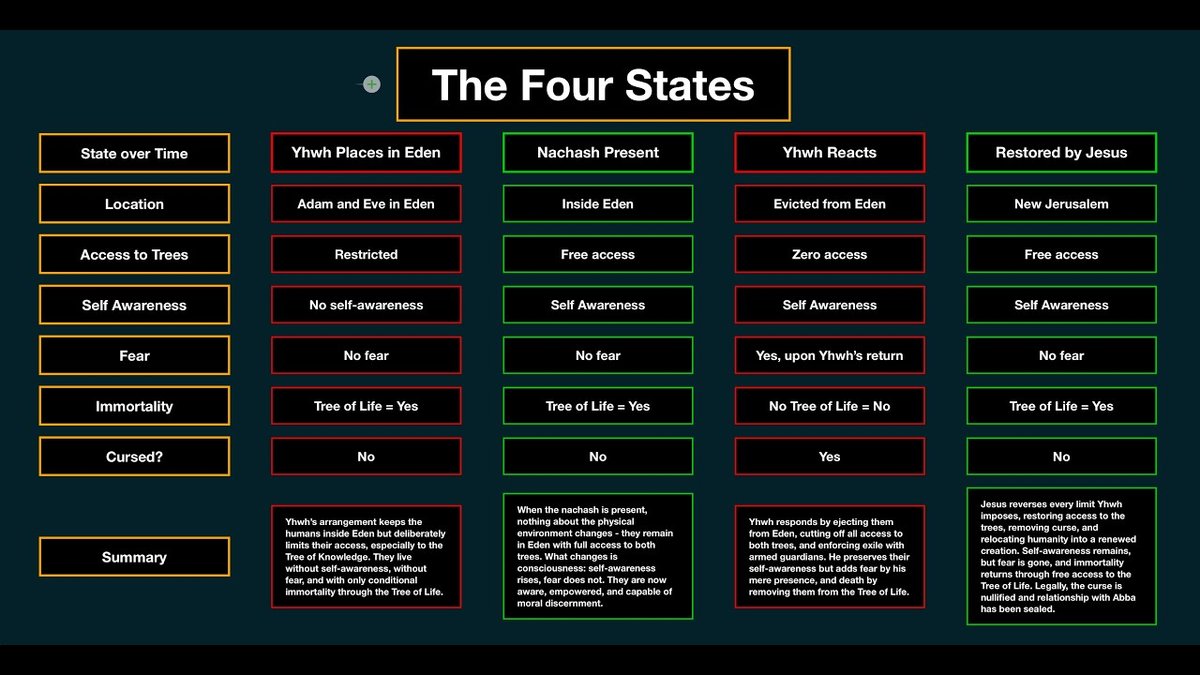
The garden word can point to a snake, something shining, and someone who says what will happen, and Michael Heiser and a Mormon Hebrew scholar both say the Bible never identifies that figure as Satan. The text compares the nachash with the animals Yhwh had made and does not say the nachash is one of them. Yhwh warns of death on the day of eating, and the humans stay alive, with eyes opened and knowledge of good and evil, which is what the nachash said. Yhwh then curses, expels, and blocks the tree of life.
Older stories tell of Enki, a wisdom figure of fresh water, warning humans and helping them survive when a harsher god wants them reduced, and the talk identifies that harsher god with Yhwh. In Numbers 21 Yhwh orders a bronze serpent, and anyone bitten who looks at it lives, with no sacrifice. The image is kept, incense is burned to it, and Hezekiah later treats it as a problem. Jesus tells Nicodemus that the Son of Man must be lifted up as Moses lifted the serpent, so that everyone who believes may have life.
Jesus takes the healer's place on purpose, in sight of a command against images and of people taught to hate the serpent. The eye-opening role and the true report belong to the nachash, and the death threat belongs to Yhwh, which is who fits murderer from the beginning. Revelation's dragon devours, makes war, pours out a flood, and empowers beasts, and the talk puts that dragon with Yhwh, not with the garden figure who stayed and did not kill. The same serpent sign later marks places of healing, and it has also been used as a cover for harm.